To take with you · 1 A4 page, landscape
SPACE passport
A blank sheet to fill in: about you, the five letters of SPACE, and place, time and calm.
Download the passport (PDF, 81 kB)
Autistic SPACE
A simple framework for working out together what an autistic person needs. It can be used in all kinds of settings, as something to hold on to and as a shared language. Here you'll find a short explanation, an idea list and a SPACE passport to fill in and take with you.
SPACE was developed by Mary Doherty, Sue McCowan and Sebastian Shaw, autistic doctors and researchers with Autistic Doctors International. It was made for healthcare, but it works just as well at school, at work or at home. To be honest, although it was developed to help support autistic people, I see its value for anyone who recognises themselves in the needs below. Personally, I support using it as part of universal design.
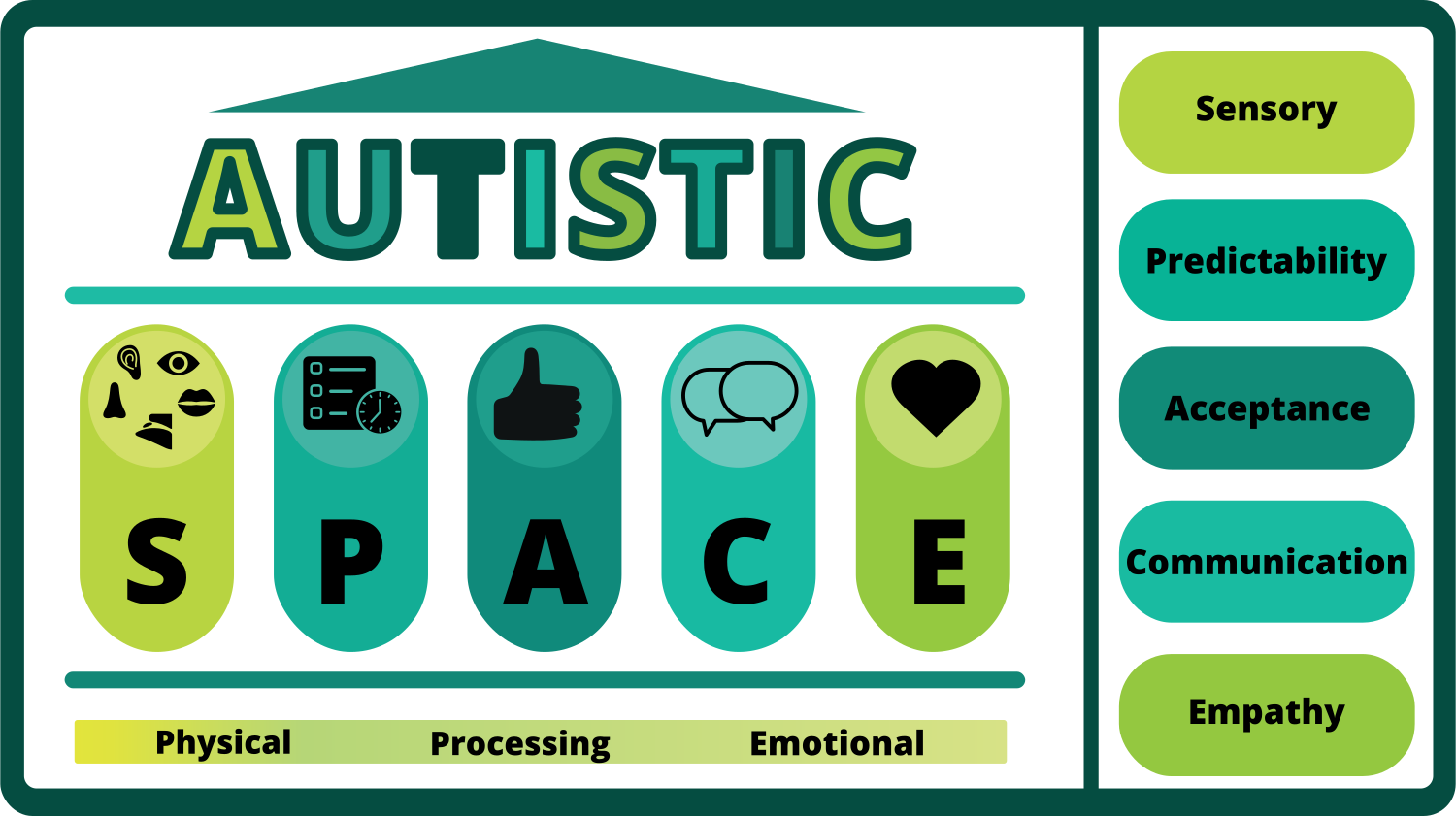
SPACE stands for five things you can look at together:
 approved
How do you respond to light, sound, smell, taste, touch, temperature or signals from your own body? What is too much, and what do you actually need?
Knowing what will happen, where, when and with whom. And what is expected of you.
Room to be yourself, being taken seriously, and care for the words we use about autism.
Communicating in the way that works for you: speaking, writing, an app or AAC (augmentative and alternative communication), gestures or pictures. Clear language helps everyone.
Understanding each other, in both directions. Asking instead of filling in for someone else.
A quiet place, distance, not being touched unexpectedly.
Time to process information, to think and to make a decision.
Feelings are allowed, without a solution being needed straight away.
Everyone is different, and what you need can change. No single adjustment works for every autistic person. SPACE helps you work out together what fits you.
There are two sheets. The idea list is for inspiration; it stays at home. The SPACE passport is the one you fill in and take with you.
Read the idea list and tick what you recognise. You don't have to read all of it.
Write down in your own words what matters to you. Start with the three most important things. You can do it together with someone.
To the GP, the hospital, the dentist, school, work or another service. Give it to whoever is helping you, use it as a guide to introduce yourself, or read it together.
What is true today may be different tomorrow. Feel free to fill in a new passport.
To take with you · 1 A4 page, landscape
A blank sheet to fill in: about you, the five letters of SPACE, and place, time and calm.
Download the passport (PDF, 81 kB)For inspiration · 2 A4 pages
Ideas per letter to tick. Handy if you're not sure what to write in your passport.
Download the idea list (PDF, 139 kB)Printing: choose A4 and actual size (100%). Black and white works too.
Fill in your passport at home, at your own pace. Take it to an appointment. You decide what you share.
Fill it in together, with the person themselves. Ask what's true, and don't fill it in for someone else.
Ask whether someone has a SPACE passport, and read it together. Use SPACE to look at your own setting too: light, sound, waiting time, how you invite people. Put the framework up on the wall.